
- by Cameron Dodd
Meng Ding Huang Ya | The Yellow Tea That Nearly Disappeared
- by Cameron Dodd
We’re all familiar with black tea and green tea and white tea, but have you tasted the deliciously creamy liquor of a Chinese yellow tea?
Allow us to introduce you to Meng Ding Huang Ya tea. Hailing from Mengding Mountain in Ya’an, Sichuan Province in China, this tea comes from one of the oldest tea-growing regions in China. Read on to discover why this isn’t your average tea.
Meng Ding Huang Ya tea is one of only three traditional yellow teas produced in China today. Yellow tea first entered the written record back in the Tang Dynasty (618-907) as an imperial Tribute Tea–essentially a high-quality, special tea that people in ancient China would send to the emperor as a gift or tax to show respect.
We see production methods being refined throughout the following Ming and Qing dynasties, but because the process of producing yellow tea is so labor-intensive, Meng Ding Huang Ya tea almost disappeared in the 20th century. Today, only a handful of authentic Chinese tea farmers are capable of producing this tea in its most traditional sense.
What makes yellow tea different from other teas? It all comes down to the processing.
Authentic Meng Ding Huang Ya is made only from early spring buds grown high in the mountain gardens of Mengding. Depending on the garden, elevations range from 700–1,400 meters above sea level. The year-round cloud and mist conditions encourage healthy growth, concentrating sweetness and freshness into every leaf.
Only the smallest, youngest buds are picked, typically in early March, when they’re fully covered in soft downy fuzz, a sign of tenderness and high quality.
On the tea color spectrum, yellow tea sits somewhere between green and dark tea.
Like green tea, after being plucked, the leaves are pan-fired to halt any oxidation (the “kill-green” step). But unlike green tea, yellow tea undergoes a special additional process called Men Huang— translated as “Sealing Yellow.”
While the leaves are still warm, the buds are wrapped in cloth or paper and moistened by steam or mist. This creates a warm, humid environment that encourages gentle hydrothermal oxidation, as opposed to the enzymatic oxidation in oolong or black tea.
This slow “yellowing” softens grassy notes and transforms the flavor into something smoother, sweeter, and rounder.
Alternated with pan-frying, this wrapping occurs multiple times throughout the processing to achieve yellow tea’s distinctive color and flavor.
While some yellow teas undergo a shortened Meng Ding Huang process today, traditional Meng Ding Huang Ya uses a longer and more laborious sealing period, resulting in greater depth and complexity in the cup.
Part of the aim of yellow tea is to remove the grassy smell and harsher elements of green tea while still maintaining the equivalent health benefits.
Like green tea, Meng Ding Huang Ya is high in catechins, including EGCG, a beneficial antioxidant often associated with anti-inflammatory properties, cell protection, immune support, and heart health.
Additionally, some tea drinkers find yellow tea easier on the stomach than green tea. That signature “Sealing Yellow” slow fermentation process softens the bitterness and astringency of some green teas and makes it easier to digest.
It’s also high in nutrients like polyphenols, amino acids, and natural vitamins, allowing the tea to impart a calm, focused energy as opposed to the jittery kind often experienced by coffee drinkers.
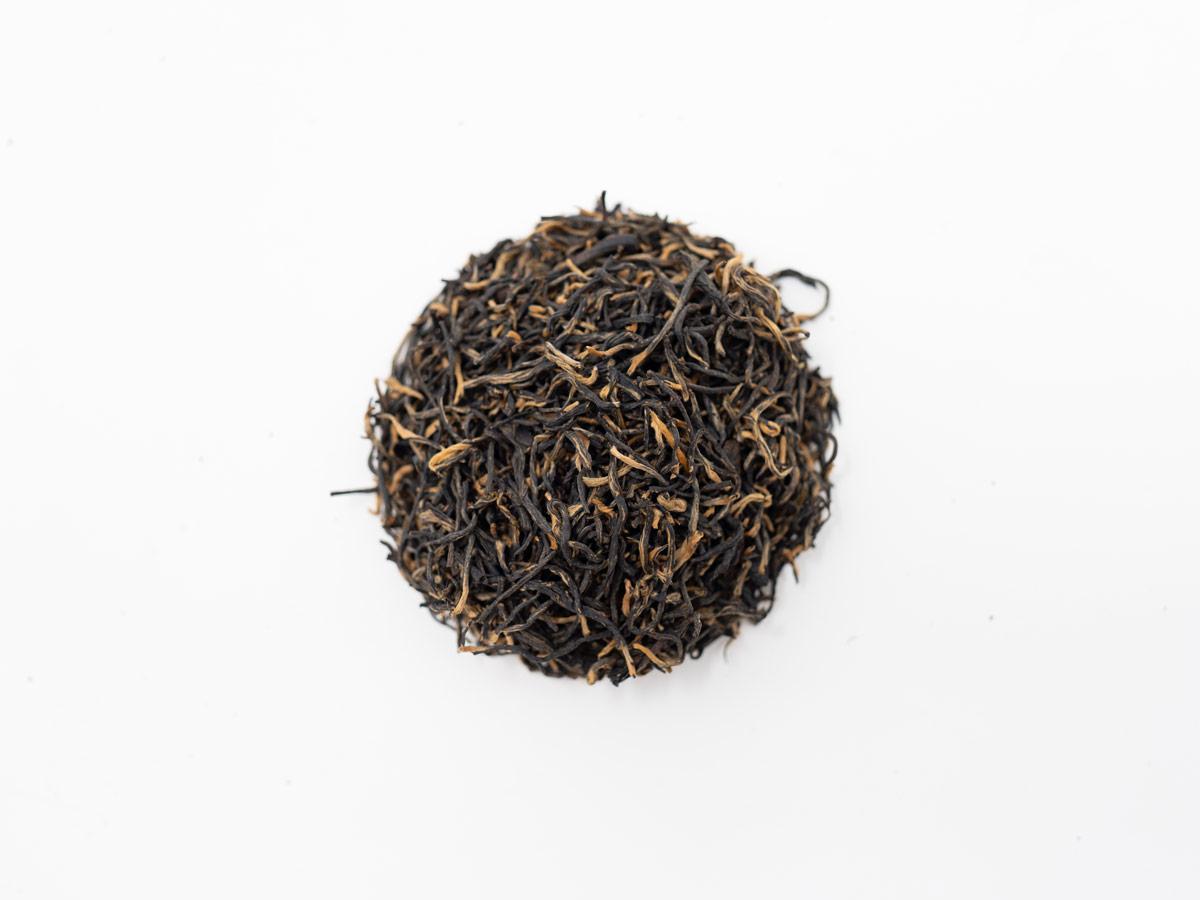
Everything about this cup is delicate–from its delicate, intact dry buds to its pale golden-yellow liquor.
Its taste is no different. Creamy, nutty, and beautifully mellow, the umami tones of buttery sweetness are tempered by gentle herbaceous notes. Meng Ding Huang Ya is a smooth, almost velvety tea without a sharp, grassy edge to worry about.
Like we said, Meng Ding Huang Ya is not your average tea. Due to the labor and skill required to produce this tea, it has become increasingly rare and expensive.
As we’ve begun carrying and cupping these special teas at Hackberry, it has opened our eyes to a new horizon of what tea is. It’s not all berries and fruit notes and sweetness; there is a real earthiness and sense of place these teas bring that isn’t found everywhere. And we can’t wait for you to experience this, too!
For those tea connoisseurs out there–and for just your everyday tea drinker, this is an experience worth having: tasting one of the rarer teas in the world from one of the oldest places where tea is grown.


Bi Tan Piao Xue | A Tea That Blooms Before Your Eyes
Read moreabout Bi Tan Piao Xue | A Tea That Blooms Before Your Eyes

The Soul of Oolong | The Legend, Craft, and Flavor of Ti Kuan Yin Tea
Read moreabout The Soul of Oolong | The Legend, Craft, and Flavor of Ti Kuan Yin Tea

English, Irish, and Scottish Breakfast Tea

Chai Tea 101 | Origin & Evolution

Chamomile | The Simple Base to Many of Your Favorite Teas
Read moreabout Chamomile | The Simple Base to Many of Your Favorite Teas

Why Is Golden Monkey So Pricey?
Silver Needle Single Origin Organic

Black Tea 101 | History, Processing, and Health Benefits
Hot. Iced. Sweetened. Unsweetened. You may think you know it. You may have been drinking it your whole life.
But there are intricacies about black tea that are fairly unknown and truly staggering. It has started wars, been used as currency, and is the most popular type of tea in the world. But there’s more to this tea than banknotes and bloodshed and bottom lines. There’s history and processing and health benefits and more!
Read moreabout Black Tea 101 | History, Processing, and Health Benefits
Tea 101 | A Brief Overview of the Tea Plant

China | Tea's Birthplace and Top Producer

Egypt | Historical and Cultural Impact of Tea
Read moreabout Egypt | Historical and Cultural Impact of Tea

Fruit Tea 101: History & Benefits

India | A Top Producer of Our Favorite Teas